The argument for grain-free dog food and cat food is not a marketing position. It is a statement about what dogs and cats evolved to process and what the research consistently shows when we look at digestibility, gut microbiome health, and the long-term consequences of feeding species-inappropriate carbohydrates.
“Dogs and cats did not evolve eating grain. The biology is clear. Following it all the way through is what the formulation requires.”
Start with the digestive tract
Dogs and cats have short gastrointestinal tracts adapted for rapid digestion of animal tissue, not sustained fermentation of plant carbohydrates. Transit time is fast. The digestive chemistry is oriented around protein and fat.
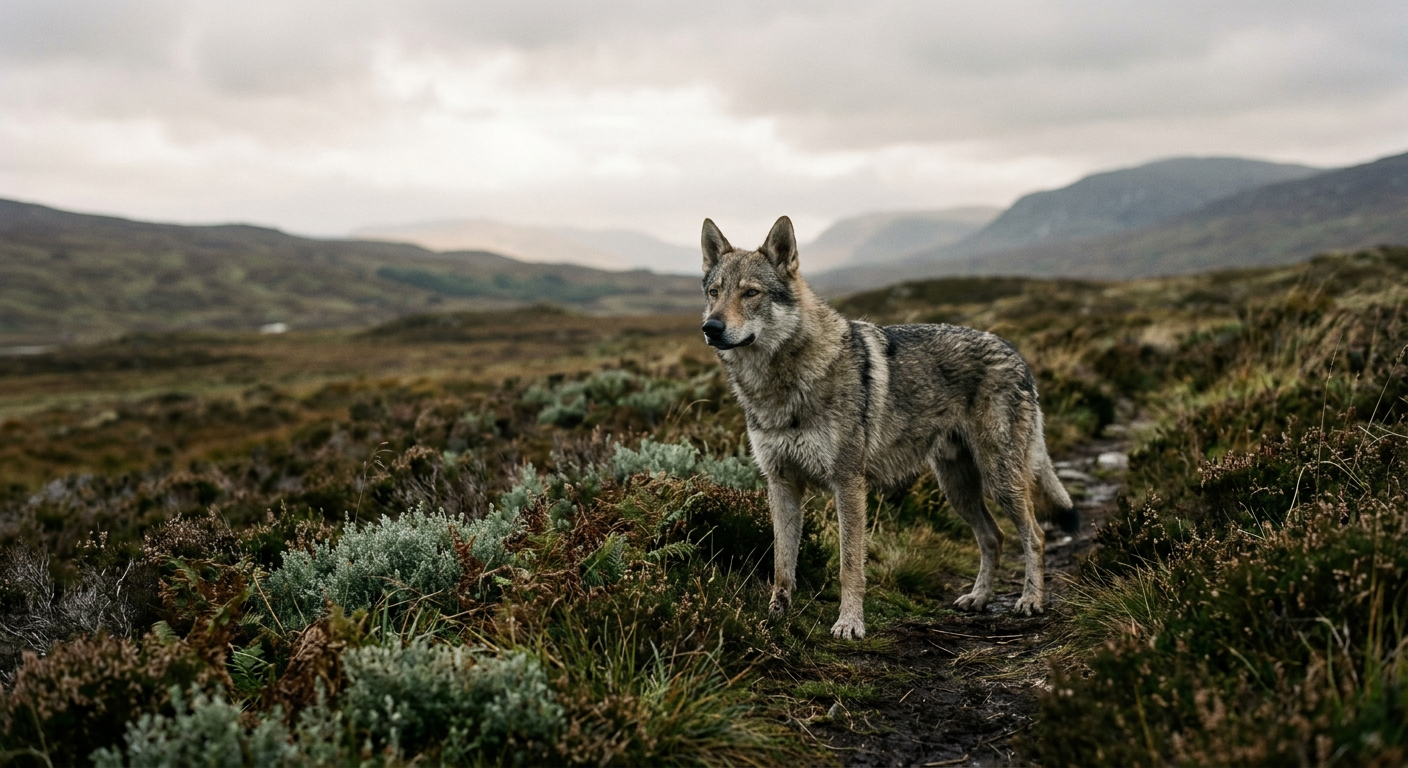
Dogs produce amylase – the enzyme that begins breaking down starch – primarily in the pancreas. Humans and true starch-adapted omnivores produce it in saliva, starting the process before food reaches the stomach. A 2013 genomic study in Nature (Axelsson, Ratnakumar, Arendt and colleagues) found that domestic dogs have more copies of the AMY2B gene than wolves, reflecting some adaptation to starch during thousands of years of cohabitation with grain-farming humans. This is a real finding and should not be dismissed. What it does not demonstrate is that dogs are equivalent to true omnivores in starch-processing capacity, or that cereal grain is an appropriate primary energy source. Partial adaptation is not the same as full adaptation.
Cats produce even less amylase and have almost no metabolic pathway for managing excess carbohydrates. Glucose that cannot be stored as glycogen circulates in the bloodstream. Over time, chronic glucose elevation from grain-heavy diets is associated with insulin resistance and diabetes mellitus.
What happens to the gut microbiome
The microbiome of a dog or cat on a high-carbohydrate diet differs measurably from one fed primarily on meat. High-starch diets favour fermentation bacteria that thrive on complex carbohydrates, displacing the protein-processing bacteria that dominate in meat-based diets. This is why some pets can experience digestive difficulties when first changing to a species-appropriate high-meat diet. Research on canine faecal microbiome composition shows a measurable shift toward protein-processing bacteria on high-meat, low-starch diets – and the shift back on return to grain-heavy feeding occurs within weeks.
The inflammation question
Lectins, found in grains and legumes, can bind to gut cells and, in sensitive animals, contribute to chronic low-grade inflammation. Phytic acid from grains compounds this by reducing absorption of the minerals the food is supposed to deliver. A diet that looks complete on the label can underperform in practice when every meal reduces bioavailability of its own declared nutrients.
On the commercial incentive
Grain is not in most commercial pet food because it is appropriate for dogs and cats. It is there because it is inexpensive, it increases the crude protein figure on the label, and it extends shelf life. These are commercial considerations. They are not nutritional ones.
A word on peas
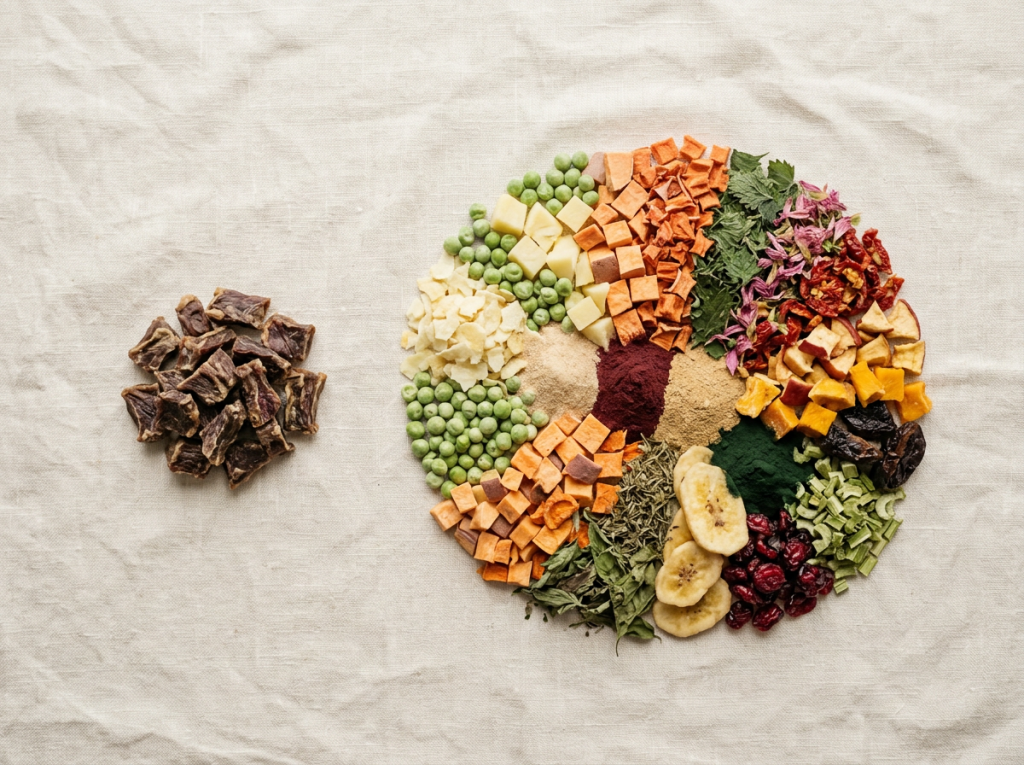
Celtic Connection recipes are formulated without grain and without legumes as protein contributors. Some recipes include up to 2% peas for their biotin and vitamin K content. They are not present to inflate the crude protein figure. This is categorically different from formulations that use peas, lentils, or chickpeas as primary protein substitutes.
Celtic Connection recipes follow the biology. Grain-free, legume-protein-free, built around named animal ingredients at declared levels. That is the standard we set, and the one we refused to compromise.
Key takeaways
- As facultative carnivores, domestic dogs have more amylase gene copies than wolves (Axelsson et al., Nature, 2013), indicating partial starch adaptation — this is not the same as being true omnivores.
- High-starch diets shift the canine gut microbiome measurably toward fermentation bacteria and away from protein-processing bacteria.
- Phytic acid in grain ingredients reduces absorption of the minerals those same ingredients declare on the label.
- Cats have almost no metabolic pathway for excess carbohydrates; chronic glucose elevation is associated with insulin resistance and diabetes.
Celtic Connection recipes follow the biology. Explore our dog food range or cat food range.
Frequently asked questions
Didn’t dogs evolve to eat grain alongside humans?
Partially. The Axelsson 2013 study found domestic dogs have more amylase gene copies than wolves, indicating some adaptation to starch during millennia of cohabitation with grain-farming humans. What it does not show is that dogs are as well-adapted to high-starch diets, or that cereal grain is an appropriate primary source for energy or to produce and maintain muscle.
I’ve heard grain-free diets are linked to heart disease in dogs. Is this true?
The FDA opened an investigation in 2018 into a potential association between certain grain-free diets and dilated cardiomyopathy. The signal appeared concentrated in diets using legumes – peas, lentils, chickpeas – as primary protein substitutes, not simply in diets that excluded grain. Celtic Connection recipes do not use legumes as protein contributors. The specific formulation concern the investigation focused on does not apply here.
My vet is concerned about grain-free diets. What should I tell them?
The relevant question is whether the grain-free food uses legumes as primary protein sources. Celtic Connection recipes use named animal protein as the primary source, with legumes present only at up to 2% for specific micronutrient content. Share the ingredient list and that context. It addresses the concern directly.
Sources
Axelsson E, Ratnakumar A, Arendt ML, et al. The genomic signature of dog domestication reveals adaptation to a starch-rich diet. Nature. 2013;495:360–364.
Sandri M et al. Raw meat-based diet influences faecal microbiome and end products of fermentation in healthy dogs. BMC Vet Res. 2017;13:65.
Explore the full range at celticconnection.eu. If you have questions about how our recipes are formulated, contact us at .