Most conversations about grain-free pet food focus on what a recipe contains. Phytic acid asks a different question: even when the right nutrients are present, are they actually reaching the body? The answer depends on what else is in the bowl.
What phytic acid is
Phytic acid – also called phytate, or myo-inositol hexakisphosphate – is the main phosphorus storage form in grains, legumes, seeds, and nuts. In the digestive system of dogs and cats, it acts as an anti-nutrient: it binds to mineral ions and prevents their absorption before they reach the bloodstream.
The mechanism is direct. Phytic acid carries six negatively charged phosphate groups, giving it a strong affinity for positively charged minerals. In the gut, it forms stable complexes with zinc, iron, calcium, magnesium, and manganese. These complexes are then not absorbed – they pass through the body with the bound minerals intact but unavailable.
“A food can meet its declared nutrient levels on paper and still fall short in practice – if those nutrients are blocked before they can be used.”
Why dogs and cats cannot compensate
Ruminants, like cows, sheep, and goats which have several stomachs, produce phytase – an enzyme that breaks phytates down before they can bind minerals. Dogs and cats do not. A 2015 review in the Journal of Food Science and Technology (Gupta, Gangoliya and Singh) confirmed that phytic acid inhibits iron, zinc, calcium, magnesium, and manganese absorption in all monogastric (single-stomach) animals lacking phytase. There is no metabolic workaround.
What chronic mineral shortfall looks like
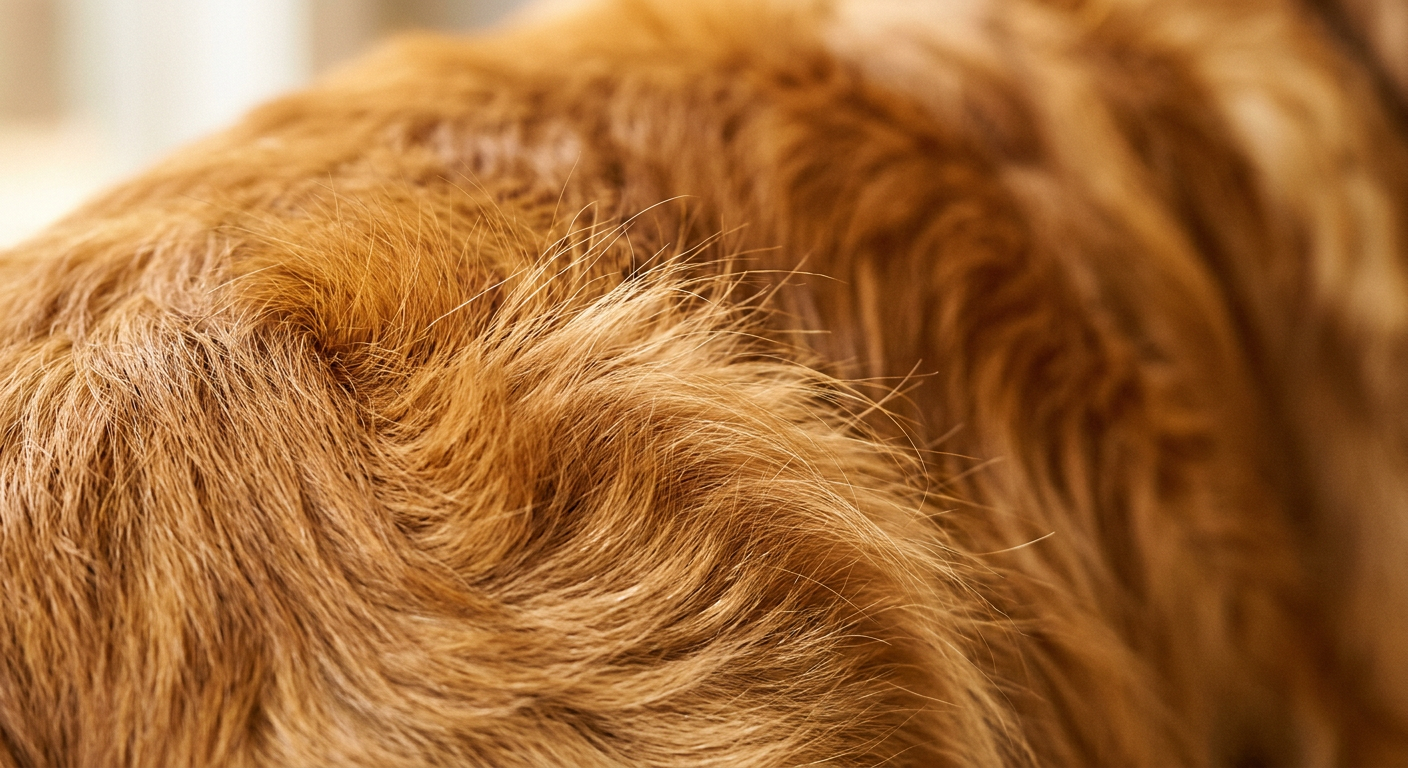
Effects accumulate over time rather than arrive suddenly. Zinc deficiency shows in coat condition – dullness, slow regrowth, reduced elasticity – and in a weakened immune response. Magnesium deficiency affects energy metabolism and muscle function. Insufficient calcium has downstream effects on bone density. Low iron affects oxygen transport throughout the body. These presentations are frequently attributed to other causes, and the dietary connection is missed.
Where phytic acid enters pet food
Cereal grains and legumes – wheat, corn, barley, oats, peas, lentils, soy – are the primary dietary sources. They are standard in mass-market formulations because of their low cost and their contribution to the crude protein figure on the label. Grain is not in conventional pet food because it is appropriate for dogs and cats – it is there because it is inexpensive.
A note on processing
Some processing methods – soaking, fermentation, prolonged heat treatment – can reduce phytic acid content. This is a legitimate counter-argument. However, the reduction is partial, variable, and not disclosed at the level required to assess phytate content in any specific product. The most reliable approach is formulating without phytate-rich primary ingredients rather than relying on processing to mitigate them.
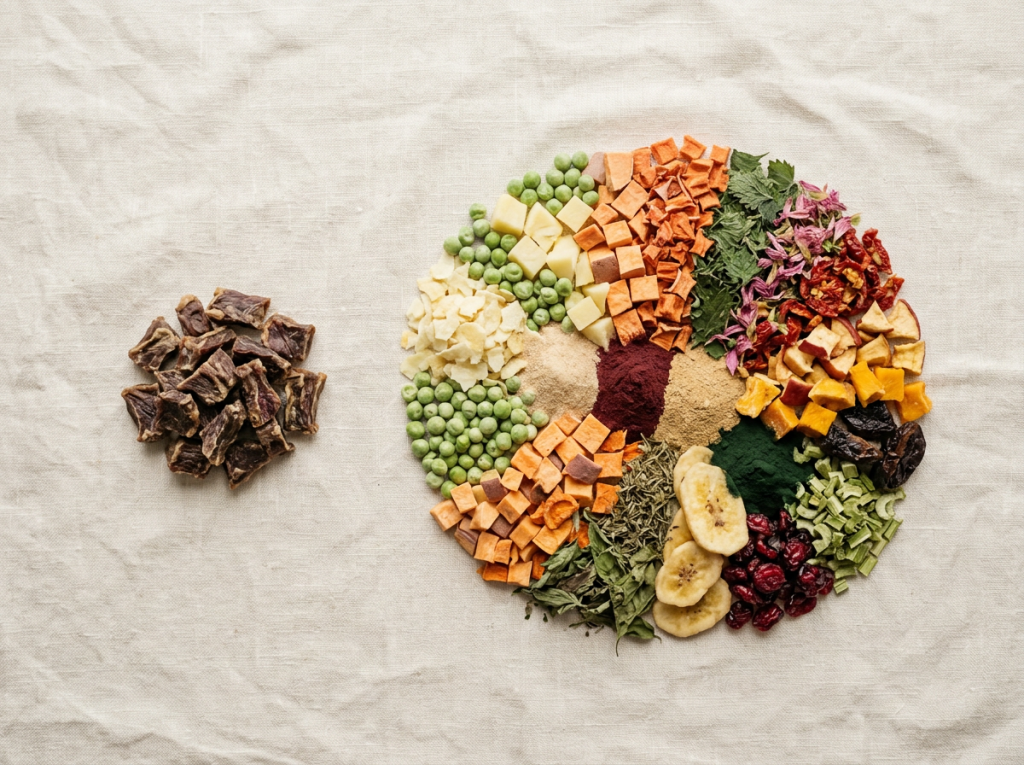
Celtic Connection recipes are formulated without cereal grains and without legumes as primary ingredients. The minerals declared on the analysis panel are the ones reaching the body – not partially intercepted at every meal. That is not a marketing position. It is the standard we set when building these recipes, and the one we refused to compromise.
Frequently asked questions
Does cooking remove phytic acid from pet food?
Partially, and variably. Soaking, fermentation, and certain heat treatments can reduce phytate levels in grains and legumes, but the reduction is neither complete nor standardised across commercial production. Partial reduction is not the same as elimination.
Are there any benefits to phytic acid?
In human research, phytic acid has shown antioxidant properties and potential anti-cancer effects in contexts where phytate exposure is unavoidable. For dogs and cats, which lack phytase and whose diets can be formulated without phytate-rich ingredients, the theoretical benefits do not outweigh the mineral absorption cost.
My dog has eaten grain-based food for years without obvious problems. Does phytic acid still matter?
Chronic mineral shortfall tends to manifest gradually and is often attributed to other causes. A dull coat, low energy, or slow recovery from illness may all have a dietary contributor that is not immediately obvious. The absence of acute symptoms is not evidence that mineral absorption is optimal.
Explore our grain-free dog food recipes and grain-free cat food recipes.
Sources
Gupta RK, Gangoliya SS, Singh NK. Reduction of phytic acid and enhancement of bioavailable micronutrients in food grains. J Food Sci Technol. 2015;52(2):676–684.
Schlemmer U et al. Phytate in foods and significance for humans. Mol Nutr Food Res. 2009;53 Suppl 2:S330–375.
Sandberg A-S. Bioavailability of minerals in legumes. Br J Nutr. 2002;88 Suppl 3:S281–285.
If you have questions about our ingredient choices and what they mean for your animal, we would like to hear from you. Contact us or explore the full range at celticconnection.eu.